My Matchbox Cars In Dangerous Situations
Rüdiger Fischer’s series My Matchbox Cars in Dangerous Situations unfolds a quiet yet striking poetics of the miniature. The five works bring together two toy worlds that would otherwise never meet: the Matchbox cars of his own childhood and the toys of his children. Through this overlap, a timeless space emerges in which generations coexist not sequentially but side by side.
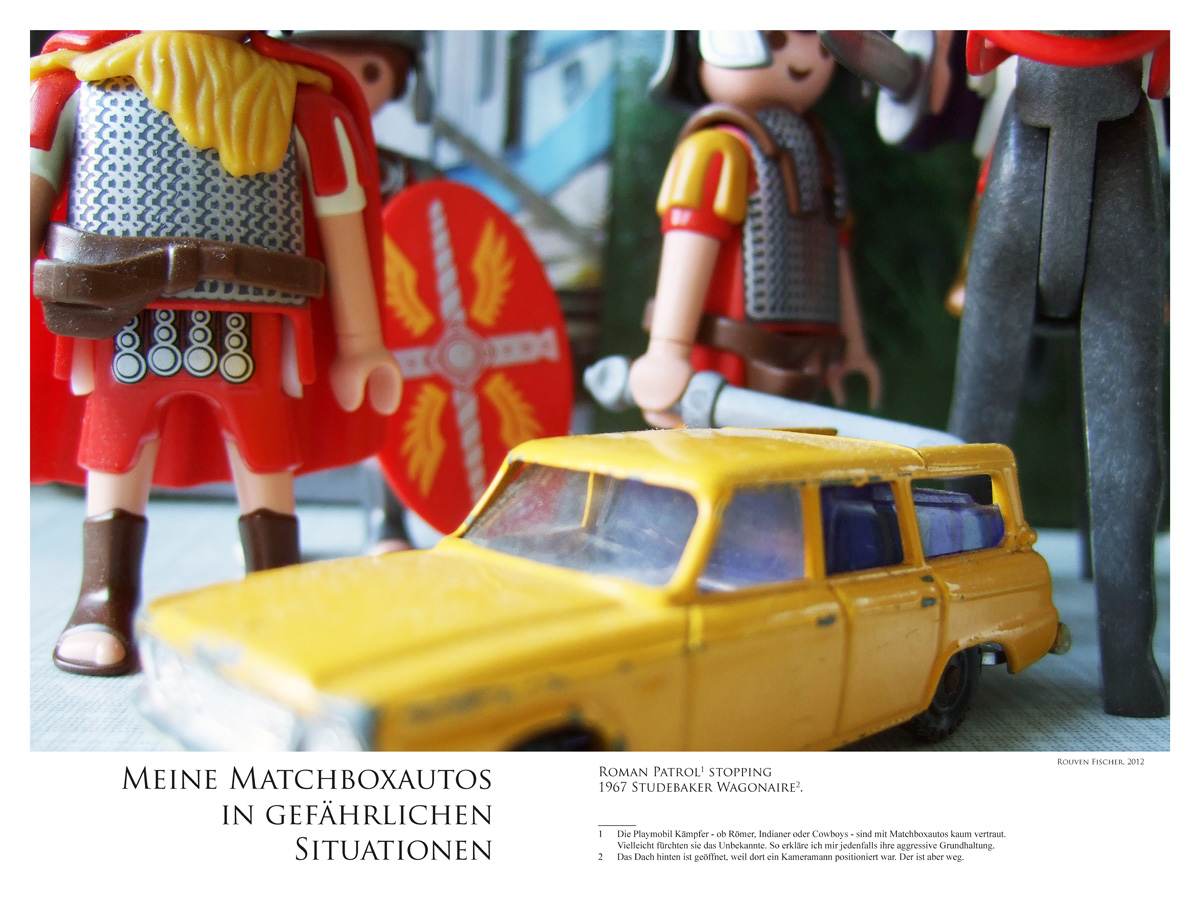
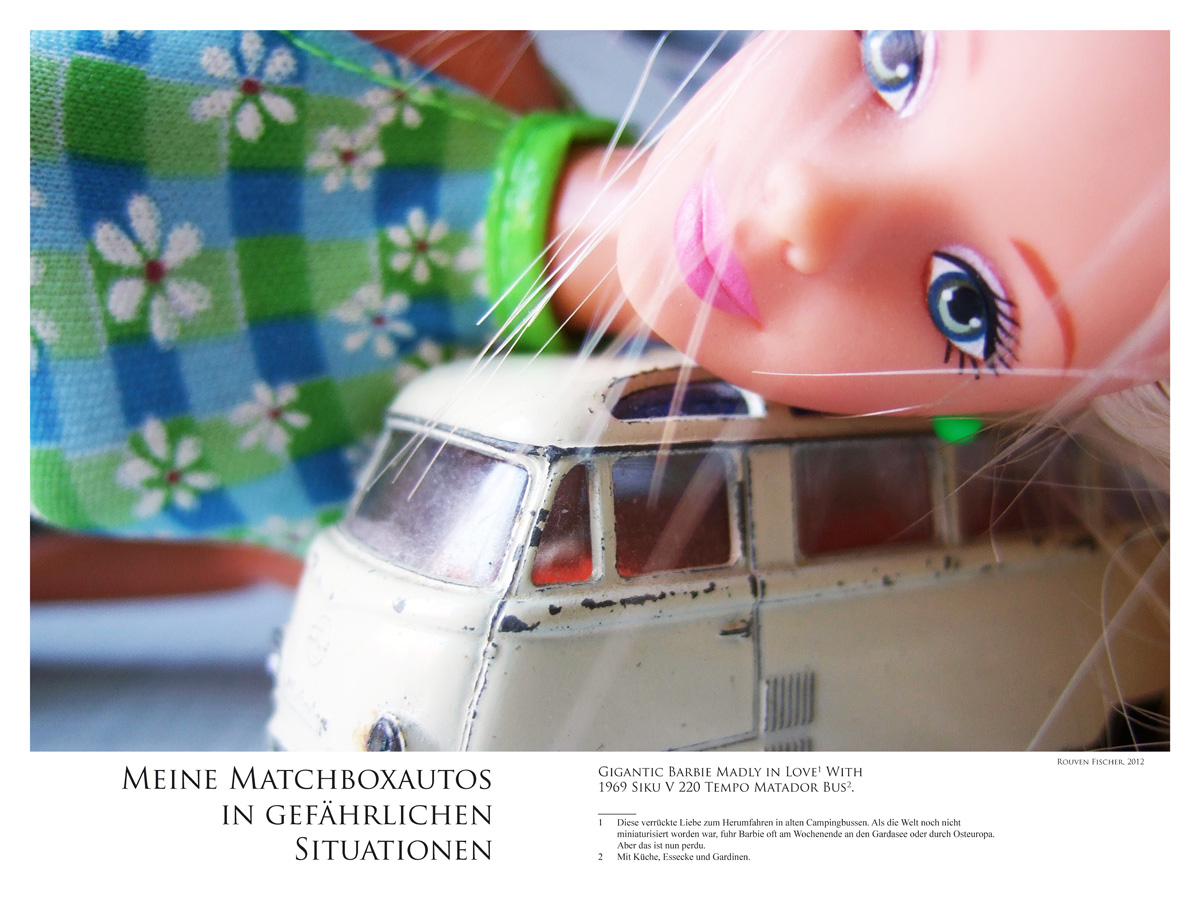
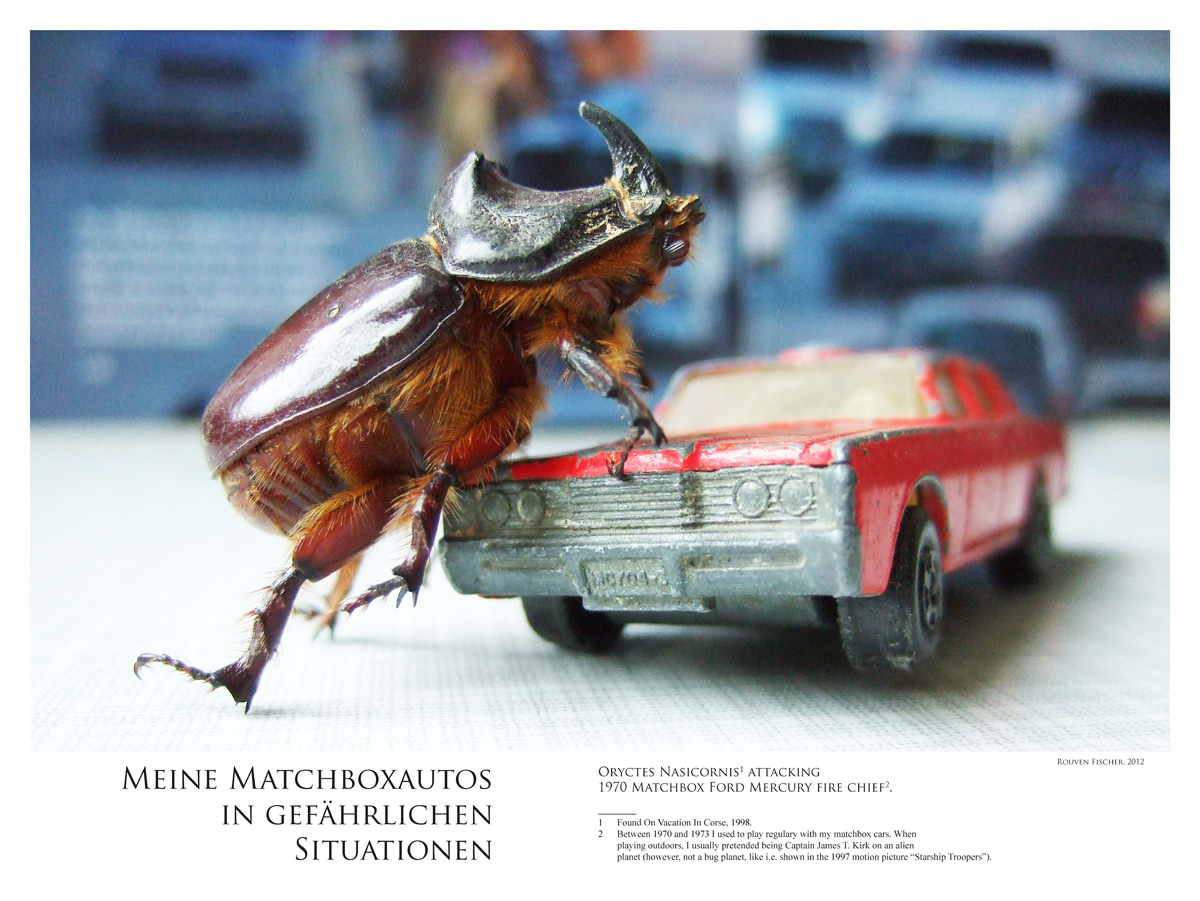
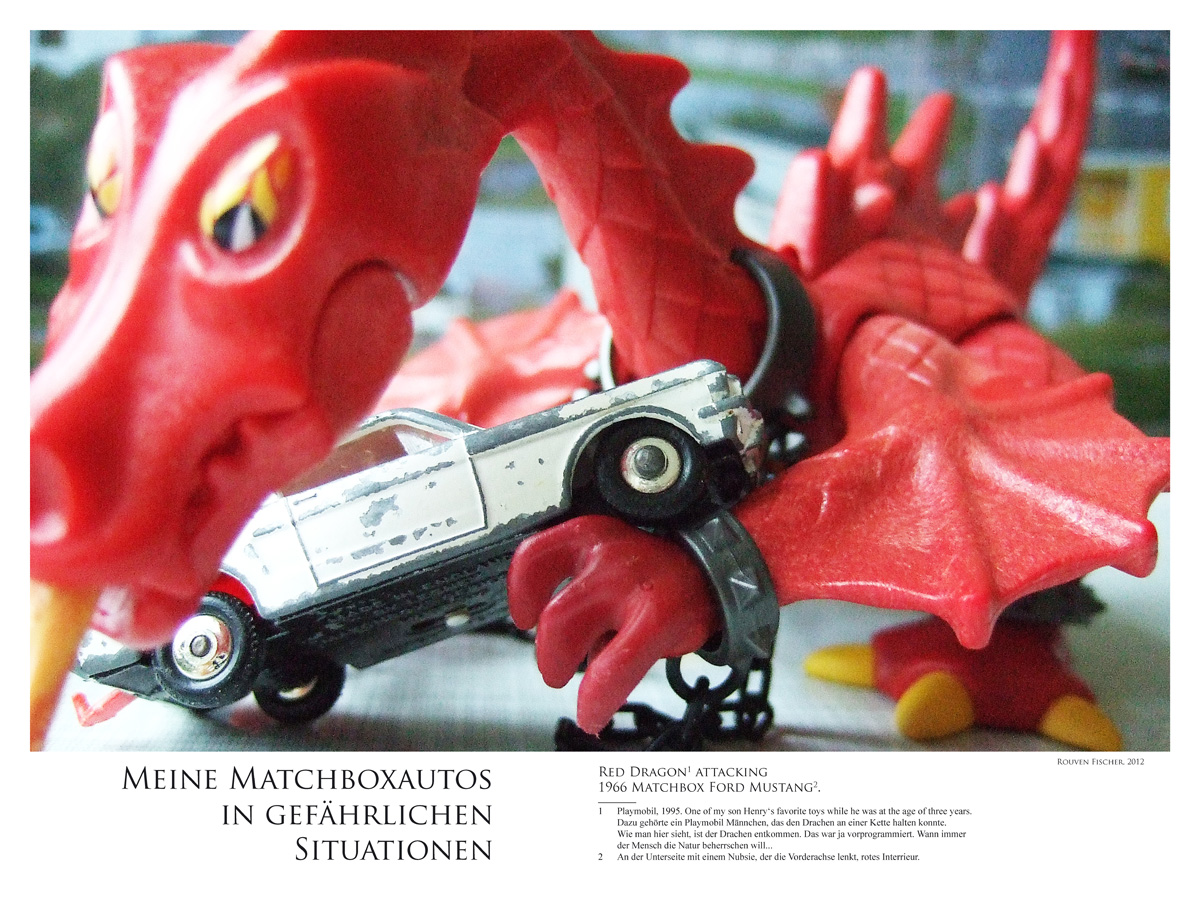
The scenes appear like frozen moments of play — moments that could just as well have taken place decades earlier. Whether a red dragon attacks a Ford Mustang, a Barbie leans against a camper van, or a rhinoceros beetle crashes into the roof of a Mercury Fire Chief, these constellations follow the logic of children’s play, where danger, drama, and exaggeration are not imitated but invented. Children have always arranged the impossible: setting figures of different scales against each other, turning cars into heroes or victims, inventing threat to create tension. Fischer takes up this impulse and treats it with artistic seriousness.
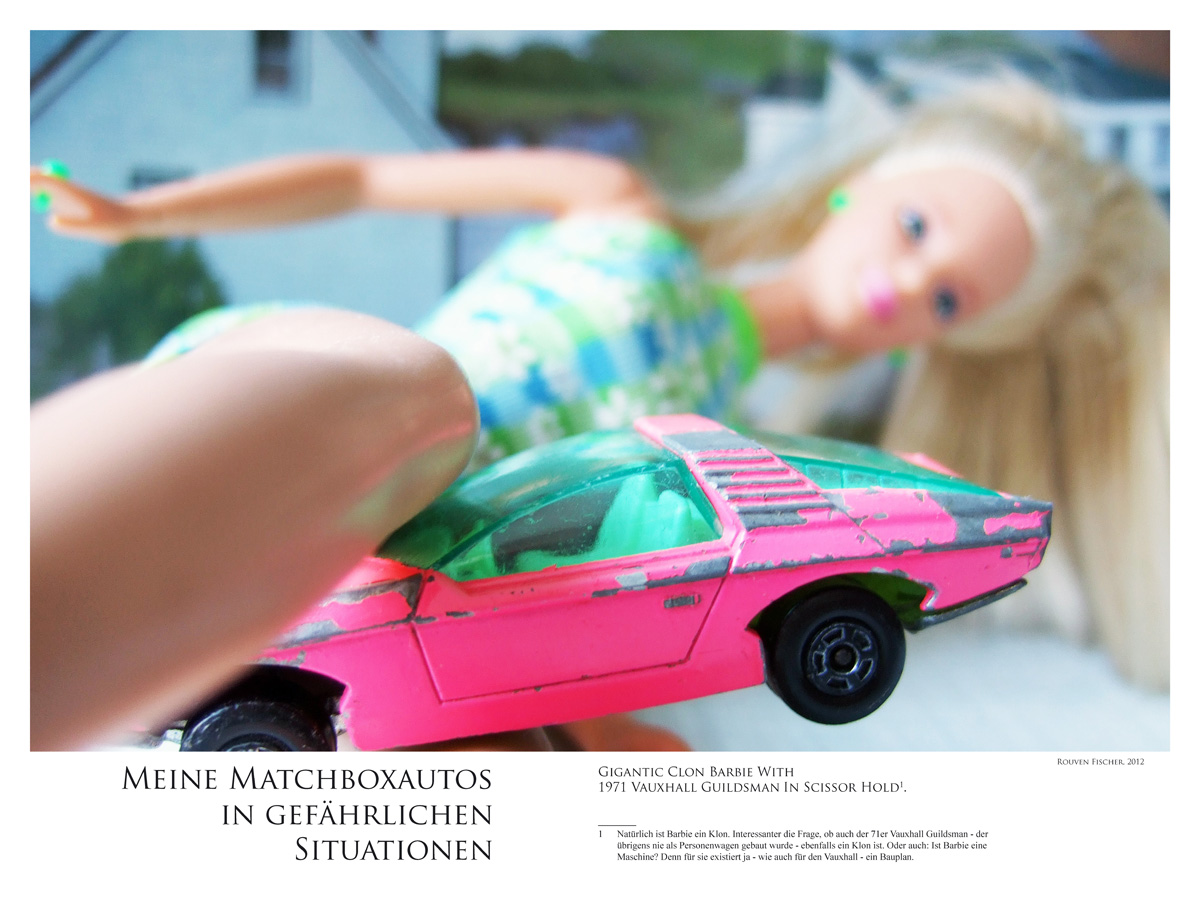
The close-ups give the scenes unexpected intensity. The camera moves so close to the objects that their everyday scale collapses. The toys become a cosmos of their own, their materiality gaining a presence that remains hidden in daily life. The glossy shell of the beetle, the worn paint of the car, the smooth plastic of the figures — all of this suddenly appears monumental. The objects become actors, claiming their place in the frame and entering into relationships that no longer depend on their original purpose.
At the same time, the objects carry a biographical charge. The old Matchbox cars show traces of use, fragments of history and memory. They carry time visibly on their surfaces. The children’s toys, by contrast, seem almost overpowering — representatives of a new phase of family life. When these things meet, a dialogue emerges that no text could produce. The past appears not as recollection but as a physical component of a present play situation.
Yet these images are not nostalgic. They do not search for a lost childhood. Instead, they show how forms of imagination are passed on. The childlike urge to invent dangerous situations is not ironized but taken seriously. Each scene holds a spark of that freedom in which it doesn’t matter whether the objects involved “belong together.” Everything may interact — organic creatures with plastic figures, miniature cars with oversized dolls, historical characters with contemporary models. The world of play is one where scale does not set limits but opens possibilities.
This freedom forms the core of the series: the works function like small theatrical pieces whose logic arises from the moment of play. Play knows no chronology; it distinguishes neither between “then” nor “now.” It creates a space in which everything may exist at once. Fischer captures this state. He does not show the act of playing but the construction of a possible world — one that a child, or an adult remembering play, could create at any moment.
My Matchbox Cars in Dangerous Situations is therefore far more than a humorous miniature series. It is an exploration of how objects carry stories, how generations mirror each other in the same things, and how imagination becomes a connecting force. The works present a world not committed to reality but to possibility — and that is precisely why they resonate.